
PRP Hair Treatment in Leicester
PRP for hair loss · 20 mins red light included · Qualified phlebotomists · Clean clinical setting · £35 hair consultation · Wigston, near Oadby
Blood taken by qualified phlebotomists. Fully trained and certified in PRP hair treatment.
We look at your scalp, take baseline photos and talk through your goals.
PRP prepared from your own blood in a clean, clinical treatment room.
Photo reviews every 8 to 10 weeks so you can see how you are responding.
PRP Hair Treatment in Wigston, Leicester and Oadby
Noticing a wider parting, a thinner ponytail, a receding hairline, thinning at the crown or more hair in the shower? PRP hair treatment uses platelet-rich plasma prepared from a small sample of your own blood to support thinning hair, with no surgery and little downtime.
At ND Skin Aesthetics, PRP for hair loss is carried out in a clean, clinical treatment room at our clinic on Bell Street, Wigston, a short drive from Oadby and Leicester city centre. Your blood is taken by a qualified phlebotomist, and your treatment is carried out by our qualified phlebotomists and trained therapists, who are fully trained and certified in PRP hair treatment and have extensive experience.
We do not just treat your scalp and send you home. We take baseline photos, review your progress and advise you on every next step of your hair journey, from your course of PRP to red light therapy between sessions and maintenance top-ups.
A Quick Look at PRP Hair Treatment
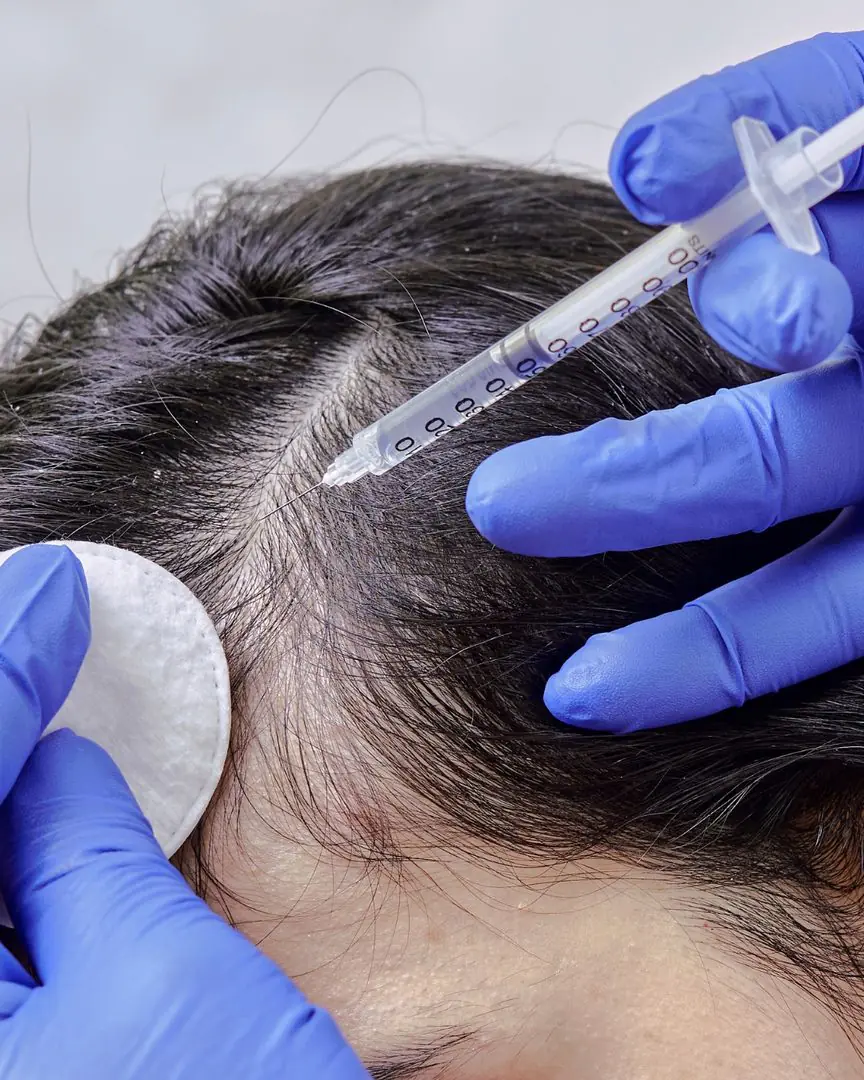
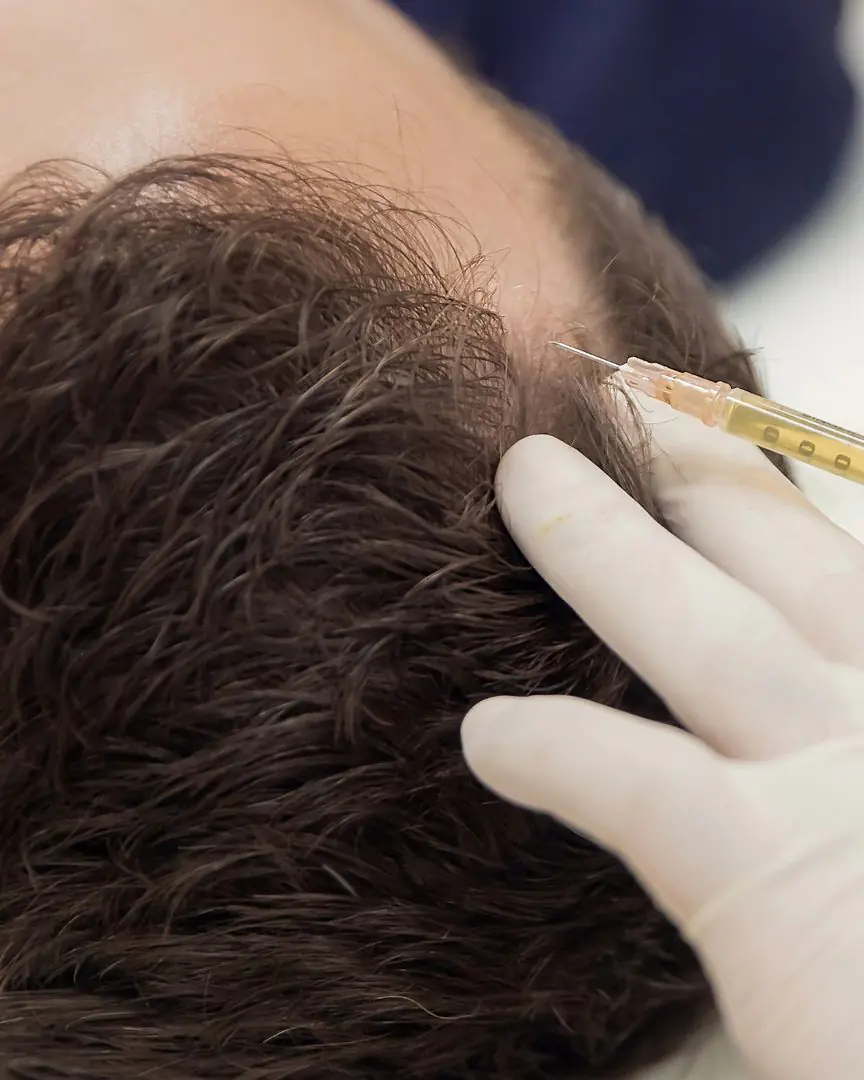
PRP is prepared from a small sample of your own blood and placed into the thinning areas of the scalp, here with fine injections. The same PRP is applied with microneedling in our other hair loss programmes.
- Plasma prepared from your own blood
- Blood taken by qualified phlebotomists
- Clean, clinical treatment room
- Back to your day straight afterwards
These videos show the treatment, not a result. Results vary from person to person, depending on the cause of your hair loss and your medical history.
What Is PRP for Hair Loss?
PRP stands for platelet-rich plasma. It is the part of your blood that is rich in platelets, which carry natural growth factors. PRP for hair is also called PRP hair injections, PRP scalp treatment or the vampire hair treatment.
A small blood sample is taken from your arm, much like a routine blood test. It is spun in a centrifuge to separate the platelet-rich plasma from the red blood cells, and the PRP is then placed into the thinning areas of your scalp, either with fine injections or through scalp microneedling.
Because PRP is prepared from your own blood, nothing synthetic is added to the treatment itself.
Supports Thinning Areas
Targets the areas where hair is thinning, such as the crown or parting.
Your Own Plasma
Prepared from your own blood, so no synthetic fillers are used.
Scalp Health
Growth factors support a healthier scalp environment.
Men and Women
Suitable for male and female pattern thinning.
Little Downtime
Most people return to their normal day straight afterwards.
How Does PRP Work on Thinning Hair?
Hair grows in cycles: a growing phase that lasts several years, a short transition, then a resting phase before the hair sheds. In pattern hair loss, follicles gradually shrink (this is called miniaturisation). Each new hair grows back finer and shorter, and the growing phase gets shorter.
The growth factors in PRP are thought to support the scalp and the follicles that are still active. That is why PRP is used to support hair density and thickness in early to moderate thinning. It cannot bring back follicles that have stopped producing hair altogether, so starting early matters.
Read more about the hair growth cycle and the causes of thinning on our hair loss clinic page.
Hair Loss Concerns PRP Can Help With
PRP is best suited to early to moderate thinning, where hair follicles are still active. Clients come to us from across Leicester, Oadby and Wigston with:
- A widening parting or see-through hair on top
- A receding hairline and thinning temples
- Crown thinning or a thin patch starting at the back
- Female pattern hair loss and diffuse thinning
- Male pattern hair loss (androgenetic alopecia) in its earlier stages
- More shedding and a thinner ponytail
- Fine, weak hair that has lost its thickness
Sudden, patchy or painful hair loss needs checking by your GP first. Alopecia areata and scarring alopecia are medical conditions, and we will refer you rather than treat them.
PRP for Female Hair Loss in Leicester
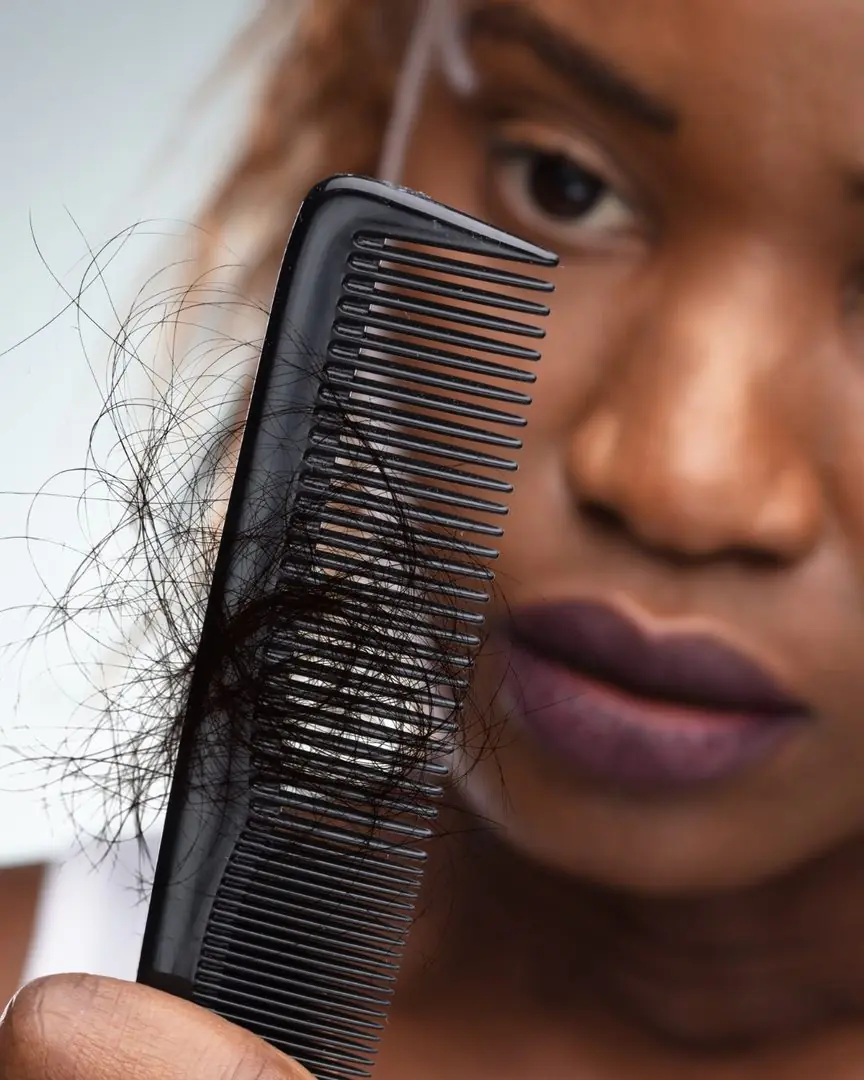
Hair loss in women often shows as a widening parting, thinning across the top of the head, or a ponytail that feels thinner than it used to. It can follow hormonal changes, having a baby, the menopause, stress, illness or diet, and in many women it is female pattern hair loss.
PRP is a popular non-surgical option for women because it works with the hair you already have. Many of our female clients choose PRP with scalp microneedling, which spreads PRP evenly across a diffuse area such as the parting.
Some causes, such as low iron or thyroid problems, need blood tests from your GP. We ask about your health at your consultation and will tell you if you should see your GP first.
PRP for Men: Receding Hairline and Crown Thinning
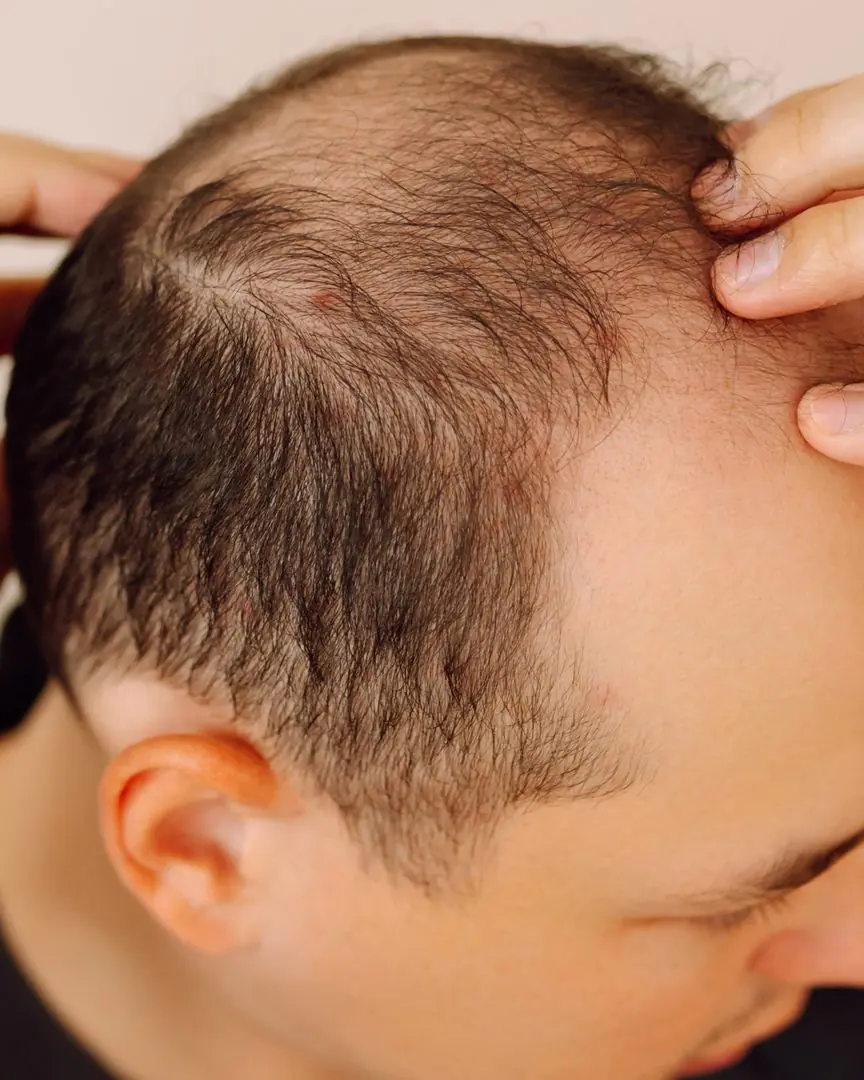
In men, hair loss usually starts at the temples and hairline, or as thinning at the crown. This is male pattern hair loss, and it tends to progress over time.
PRP for men works best in the earlier stages, while hair is thinning rather than gone. It is a non-surgical option that some men choose before considering a hair transplant, and we can talk you through how it fits alongside hair loss treatments from your GP or pharmacist.
Treatment focuses on the areas that concern you most, usually the hairline, temples and crown.
PRP Hair Loss Programmes and Packages
Two programmes, each built around PRP. Sessions are 4 weeks apart with progress reviews. Both include 20 minutes of Dermalux red light in every session, and PRP Boost adds scalp microneedling. Tap a price to request a booking.
Classic PRP
PRP scalp injections into the thinning areas, with 20 minutes of Dermalux Tri-Wave MD red light (worth £40) included in every session. A course of 3 works out at £167 per session, and a course of 6 at £150 per session.
PRP with Microneedling (PRP Boost)
PRP with Dermapen 4 scalp microneedling, finished with 20 minutes of Dermalux Tri-Wave MD red light in every session. A course of 3 works out at £200 per session, and a course of 6 at £170 per session.
Maintenance
Once your course is complete, a top-up PRP session every 3 to 4 months helps maintain your results, with 20 minutes of Dermalux red light included.
| Classic PRP | PRP Boost | |
|---|---|---|
| PRP | Injections | Microneedling |
| Dermalux red light | 20 mins included | 20 mins included |
| Photo progress reviews | Included | Included |
| Course price | 3 for £500, or 6 for £900 | 3 for £600, or 6 for £1,020 |
Extra Dermalux Sessions Between Visits
Dermalux scalp session
10 to 15 minutes of Dermalux red light on the scalp between your PRP visits. Red light is most effective with regular sessions, so a weekly course works best.
Results vary from person to person.
Why We Combine PRP, Microneedling and Red Light Therapy
Hair loss rarely has one simple fix, so our packages link treatments together, each doing a different job:
- PRP places growth factors from your own blood into the thinning areas.
- Scalp microneedling spreads PRP evenly across the whole area and stimulates the scalp at the same time.
- Dermalux red light therapy supports scalp health and works best with regular use, so 20 minutes is built into every PRP session, Classic and Boost, and you can add extra sessions between visits.
Booked one by one, these treatments add up, and red light therapy in particular needs regular sessions. Our packages bring them together at one course price, so you get a complete plan for your hair rather than paying for each part on its own.
PRP Injections or PRP with Microneedling?
| Classic PRP | PRP Boost | |
|---|---|---|
| How PRP is applied | Fine injections into the thinning areas | Scalp microneedling across the whole area |
| Often chosen for | Targeted areas such as the hairline or crown | Diffuse thinning, a widening parting, the top of the head |
| Dermalux red light | 20 minutes included in every session | Included in every session |
| Course | 3 or 6 sessions | 3 or 6 sessions |
Not sure which suits you? We recommend a programme at your consultation, based on where and how your hair is thinning.
Add Dermalux Red Light Therapy for Hair
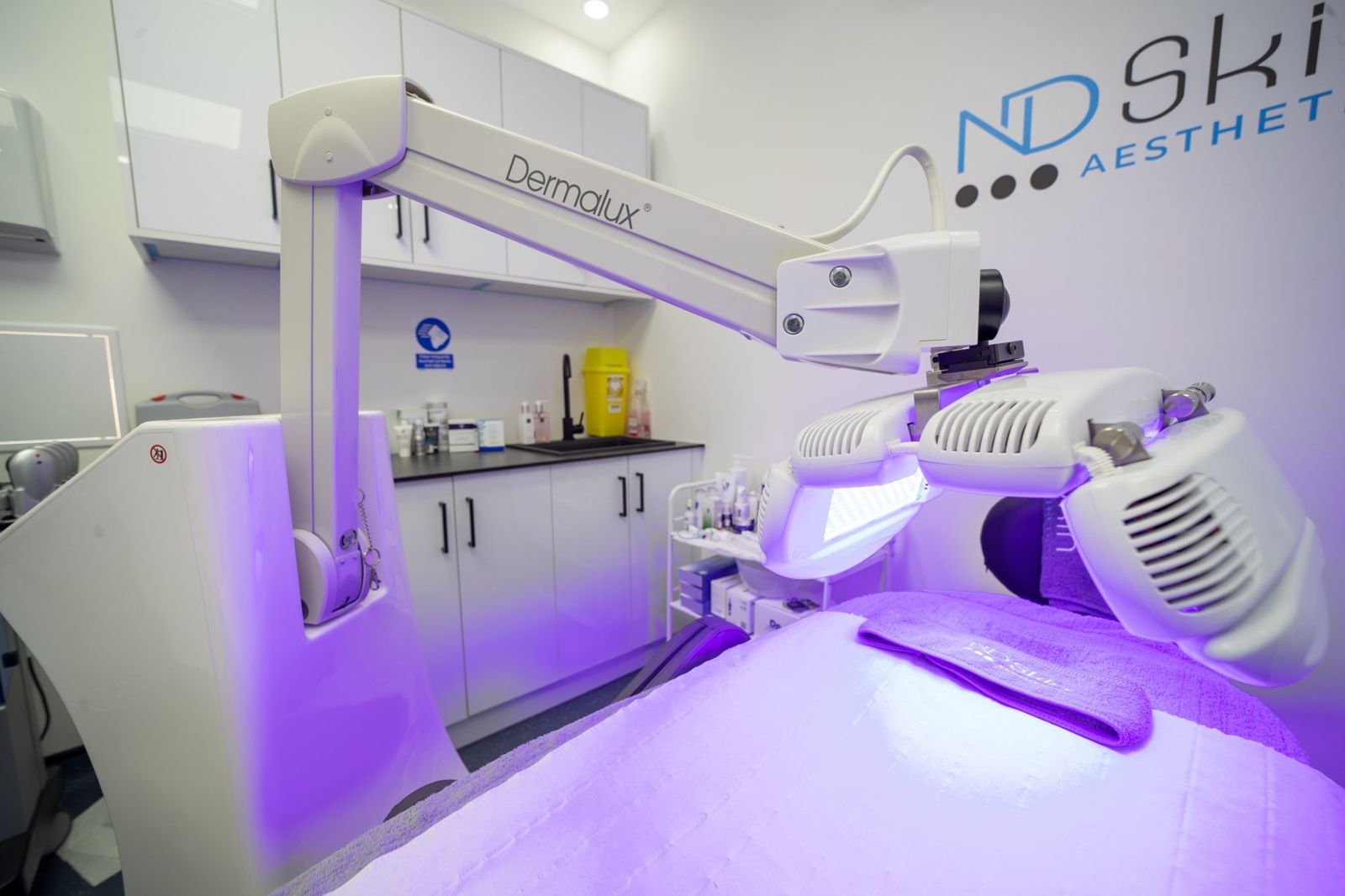
Dermalux uses medical-grade red light, the wavelength most studied for hair, to support scalp health alongside PRP. Every PRP session at ND Skin, Classic PRP and PRP Boost, now includes a 20-minute Dermalux Tri-Wave MD red light session at no extra cost. On its own, a 20-minute Dermalux session is £40.
Red light works best with regular use, so we also offer Dermalux scalp sessions between your PRP visits. Each session takes 10 to 15 minutes and there is no downtime.
How Red Light Supports Your PRP
- The Dermalux Tri-Wave MD uses red light (633nm) and near-infrared light (830nm), which reach the scalp and are thought to boost energy production in the cells around the hair follicles.
- It is thought to support circulation in the scalp, which brings oxygen and nutrients to the follicles.
- It helps calm redness and tenderness after PRP injections or microneedling.
- Low-level red light has been studied for pattern hair loss, and it works best with regular sessions over several months.
- It is comfortable, with no needles and no downtime.
Red light supports your PRP course; it does not replace it. Results vary from person to person.
Extra Dermalux sessions between visits
- Single session: £35
- Course of 8: £240 (£30 per session)
- 20 minutes already included in every PRP session
- No downtime, relaxing and comfortable
Why Choose ND Skin for PRP Hair Treatment in Leicester?
- A clean, clinical treatment room in Wigston, near Oadby
- Blood taken by qualified phlebotomists
- Fully trained and certified in PRP hair treatment, with extensive experience
- Two PRP programmes: targeted injections, or PRP with microneedling
- 20 minutes of Dermalux red light included in every PRP session
- Baseline photos and progress reviews at every stage
- Advice on your whole hair journey, including maintenance
- Clear course prices, with pay per session available
Who Carries Out Your PRP Hair Treatment?
Your blood sample is taken by a qualified phlebotomist, trained in safe blood collection. Your PRP is prepared and applied by our qualified phlebotomists and trained therapists, who are fully trained and certified in PRP hair treatment and have extensive experience.
Every treatment takes place in a clean, clinical treatment room, with single-use needles. We check your medical history before any treatment, and we will always tell you honestly if PRP is not the right option for you.
How PRP Hair Treatment Works
Each session takes around 60 to 75 minutes in our clinic. Most people return to their normal day straight afterwards.
1. Blood Sample
A small sample of blood is taken from your arm by a qualified phlebotomist.
2. Preparation
Your blood is spun in a centrifuge to separate the platelet-rich plasma.
3. Treatment
PRP is applied to the thinning areas by injection or microneedling.
4. Red Light
Every session finishes with 20 minutes of Dermalux red light.
Before Your Session
- Tell us about any medicines, including blood thinners
- Eat a meal and drink plenty of water beforehand
- Wash your hair on the morning of treatment
- Avoid alcohol for 24 hours before
After Your Session
- Mild tenderness or redness usually settles within a day
- Avoid washing your hair for 12 to 24 hours
- Avoid saunas, swimming and hard exercise for 24 hours
- Contact us if you have any concerns
PRP Step by Step: From Your Blood Sample to Your Scalp
Here is exactly what happens at a PRP session at our clinic in Wigston, from the moment you arrive to the moment you leave.
- Check-in and scalp check. We confirm your health and any medicines, look at your scalp and take progress photos from the same angles at every visit.
- Your blood sample. A qualified phlebotomist takes a small sample of blood from your arm into sterile tubes made for PRP, much like a routine blood test. It only takes a few minutes.
- Into the centrifuge. The tubes go into a centrifuge, which spins them at high speed for several minutes.
- Separating the PRP. Spinning separates your blood into layers. The red blood cells settle at the bottom and the golden, platelet-rich plasma rises to the top. We draw off the platelet-rich layer, ready for your scalp. Nothing synthetic is added.
- Preparing your scalp. Your scalp is cleansed and we map the thinning areas, usually the parting, crown, hairline or temples.
- Applying your PRP. With Classic PRP, the plasma is placed with fine injections at small, regular spaces across the thinning areas. With PRP Boost, Dermapen 4 scalp microneedling spreads it evenly across the whole area.
- Dermalux red light. Every session finishes with 20 minutes of Dermalux Tri-Wave MD red light while you relax.
- Aftercare and your next date. We go through your aftercare and book your next session 4 weeks later, so your course stays on schedule.
The whole visit takes around 60 to 75 minutes, and most people go straight back to their day.
When to Have PRP: Timing and Preparation for the Best Results
How you prepare, and when you book, makes a real difference to how your session feels and how well your course runs. We plan the timing with you at your consultation. Our general advice:
The best time of day
We usually recommend a morning or early-afternoon appointment, after a proper meal and plenty of water. Being well fed and hydrated makes your blood sample easier to take and helps you feel well during treatment.
The week before
- Avoid anti-inflammatory painkillers such as ibuprofen and aspirin for 3 days before your session, unless a doctor has told you to take them. Paracetamol is fine. Never stop a prescribed medicine without checking with your GP.
- Avoid hair colouring, bleaching, perming or relaxing in the week before and the week after treatment.
- Cut down on smoking as much as you can.
The day before and on the day
- Avoid alcohol for 24 hours before.
- Drink plenty of water the day before and on the morning of your session.
- Eat a meal around 2 hours before you arrive.
- Wash your hair that morning and leave out styling products, oils and dry shampoo.
Planning your course
- Sessions are 4 weeks apart. We book all your course dates at the start, so the timing stays consistent.
- Avoid booking the day before a big event: your scalp can be tender and you should not wash your hair for 12 to 24 hours.
- Start early. PRP works best while hair is thinning, not once it has gone.
- If you feel unwell, have a cold sore or any infection on the scalp, or become pregnant, let us know and we will move your session.
Your practitioner will tailor this advice to you and your health.
PRP Hair Treatment: Results and What to Expect
Hair grows in slow cycles, so PRP works gradually. Sessions are 4 weeks apart, and we recommend a course of 3, or 6 for the best value, before changes become noticeable. We take photos at your first visit so we can compare them at each review.
Sessions 1 and 2
Your scalp is treated every 4 weeks. Shedding may settle before new growth is seen.
Progress Review
At around 8 to 10 weeks we compare your photos with your baseline.
3 to 6 Months
Any improvement in density and thickness usually becomes more visible.
Maintenance
A top-up every 3 to 4 months helps maintain your results.
Results vary from person to person, depending on the cause and stage of your hair loss. PRP is best suited to early to moderate thinning. Your practitioner will explain what you can realistically expect at your consultation.
Your Hair Journey: How We Follow You Up After PRP
PRP is a course, not a one-off. We stay with you after every session and plan each next step with you:
- 1 to 2 days after: we check in to see how your scalp feels and answer any questions.
- Between sessions: Dermalux scalp sessions, ideally weekly, if your plan includes them.
- Every 4 weeks: your next PRP session, with progress photos.
- At 8 to 10 weeks: a progress review, comparing your photos with your baseline.
- At 3 to 6 months: a full review of how you have responded, and a plan for maintenance.
- Every 3 to 4 months after your course: a maintenance top-up. We remind you when it is due.
We also advise you on gentle hair and scalp care at home, and on when to see your GP, for example for blood tests if your hair loss may be linked to iron, thyroid or hormones. We tell you honestly how you are responding and adjust your plan if needed.
Does PRP for Hair Loss Work?
PRP has been studied most in pattern hair loss in men and women. A number of studies have reported improvements in hair density and thickness for some people after a course of treatment, and it is now widely offered as a non-surgical option.
It does not work for everyone. Results vary with the cause of your hair loss, how long you have had it, your age and your general health. PRP works best in early to moderate thinning and is not suitable for complete baldness or scarring alopecia. PRP is not a cure for hair loss, and maintenance sessions are needed to help keep any improvement.
PRP Side Effects and Safety
Because PRP is prepared from your own blood, the risk of an allergic reaction to the PRP itself is very low. Common, short-lived side effects include:
- Tenderness or a tight feeling on the scalp for a day or two
- Redness, mild swelling or pinpoint bleeding at the treatment sites
- Bruising where the blood sample was taken, or on the scalp
- A mild headache after treatment
Infection is rare. Following the aftercare advice we give you helps reduce the risk. We go through the risks with you at your consultation.
Is PRP Hair Treatment Right for You?
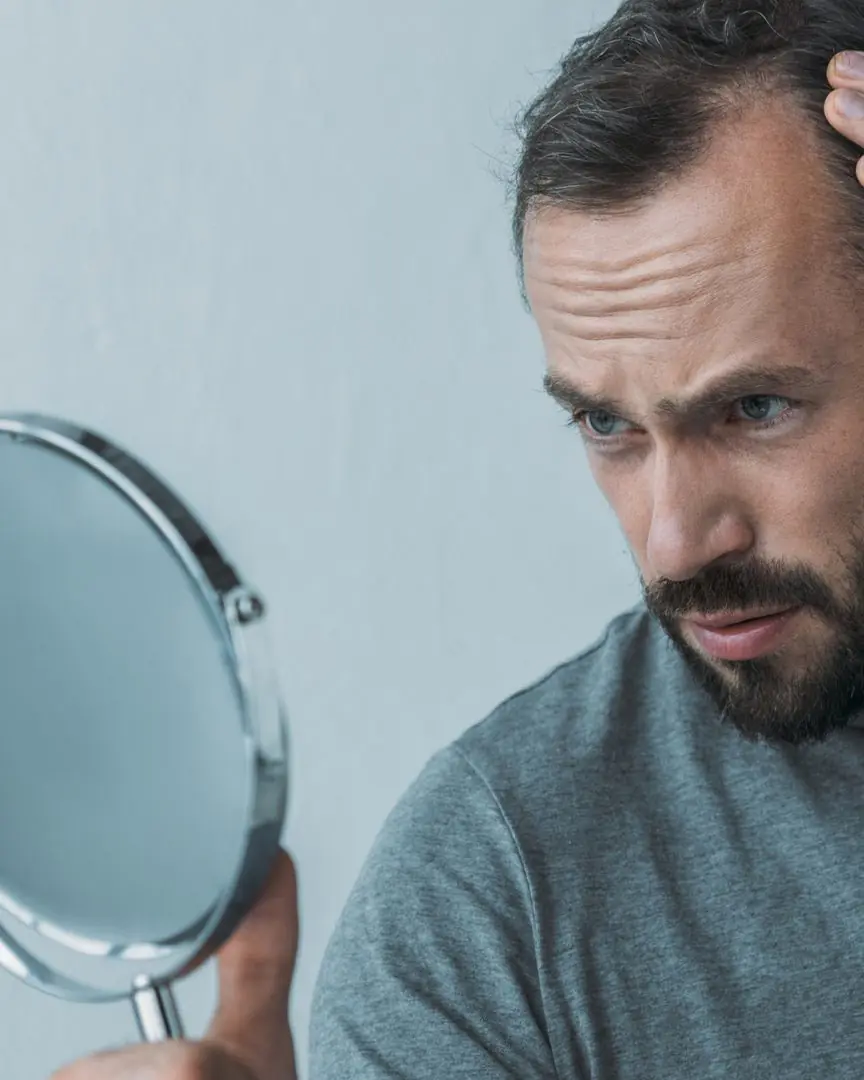
PRP may suit you if you have early to moderate hair thinning and want a non-surgical option. Your practitioner will check your scalp and medical history at your consultation. Some causes of hair loss need a GP or specialist first, and we will tell you if that applies.
It may suit you if you have
- A widening parting
- Thinning at the crown or temples
- Increased shedding
- Finer, weaker hair than before
- Early male or female pattern thinning
Who Should Not Have PRP?
PRP is not suitable for everyone. We will not go ahead, or we will ask you to check with your GP first, if you:
- Have a blood or platelet disorder, or a bleeding condition
- Take blood-thinning medicine
- Have an infection or skin condition on the scalp
- Are having treatment for cancer
- Are pregnant or breastfeeding
- Have sudden, patchy or scarring hair loss that has not been checked by a doctor
Please tell us about any medicines and health conditions when you book.
Your Hair Consultation
Every programme starts with a hair consultation. We look at your scalp, ask about your health and any medicines, take baseline photos and recommend the programme that suits your hair loss. There is no obligation to book.
PRP vs Hair Transplant
A hair transplant moves follicles from the back of the head to thinning areas. It is surgery, with a higher cost and a longer recovery, and it suits more advanced hair loss with a good donor area. PRP is non-surgical and works with the hair you already have, so it suits earlier thinning.
Some people use PRP to support their existing hair before considering a transplant. We do not carry out hair transplants, but we will explain the options honestly at your consultation.
How Much Does PRP Hair Treatment Cost in Leicester?
Classic PRP £200, £500 for a course of 3, or £900 for a course of 6, with 20 minutes of Dermalux red light included in every session. PRP with microneedling (PRP Boost) £250, £600 for a course of 3, or £1,020 for a course of 6, with 20 minutes of Dermalux in every session. Extra Dermalux sessions between visits £35, or £240 for a course of 8. Every programme starts with a consultation, and pay per session is available on courses.
Our packages bring PRP, microneedling and Dermalux red light together at one course price, which works out cheaper per session than booking each treatment separately.
Tap any price to request a booking. Every programme starts with a hair consultation (£35, redeemed against your treatment if you go ahead on the same day).
PRP Hair Loss Programmes
Extra Dermalux Sessions Between Visits
Every programme starts with a hair consultation (£35, redeemed against your treatment if you go ahead on the same day) with one of our qualified phlebotomists and trained therapists. Pay per session available on courses.

 Trustindex verifies that the original source of the review is Google.

 Trustindex verifies that the original source of the review is Google.
 Trustindex verifies that the original source of the review is Google.
 Trustindex verifies that the original source of the review is Google.
 Trustindex verifies that the original source of the review is Google.
 Trustindex verifies that the original source of the review is Google.
 Trustindex verifies that the original source of the review is Google.
 Trustindex verifies that the original source of the review is Google.
 Trustindex verifies that the original source of the review is Google.

PRP Hair Treatment Near Me: Wigston, Oadby, Leicester and Surrounding Areas
ND Skin Aesthetics is at 32 Bell Street, Wigston, Leicester LE18 1AD, a short drive from Oadby and Leicester city centre. We work by appointment only.
Clients come to us for PRP hair treatment from Leicester city, Oadby, Wigston, South Wigston, Blaby, Countesthorpe, Kibworth, Great Glen, Fleckney, Enderby, Narborough, Glen Parva, Knighton, Stoneygate, Evington, Syston, Birstall, Lutterworth, Market Harborough and across Leicestershire.
More Hair Loss Treatments at ND Skin
PRP is one part of our hair loss service. Explore the rest:
- Hair Loss Clinic in Leicester: every hair loss treatment we offer, and how to choose
- Dermalux LED light therapy: the Dermalux Tri-Wave MD we use for red light
- PRP with microneedling: our most popular hair loss programme, PRP spread across the scalp with microneedling
- Dermapen 4 microneedling for the face
Frequently asked questions
What is PRP hair treatment?
PRP (platelet-rich plasma) hair treatment uses plasma prepared from a small sample of your own blood. It is rich in platelets, which carry growth factors, and it is placed into the thinning areas of your scalp by fine injections or scalp microneedling to support thinning hair.
How much does PRP hair treatment cost in Leicester?
At ND Skin in Wigston, Classic PRP is £200 a session, £500 for a course of 3 or £900 for a course of 6, with 20 minutes of Dermalux red light included every time. PRP with microneedling (PRP Boost, with 20 minutes of Dermalux) is £250 a session, £600 for a course of 3, or £1,020 for a course of 6. Every programme starts with a £35 hair consultation, redeemed against your treatment if you go ahead on the same day. See all prices.
Does PRP for hair loss work?
Studies, mostly in pattern hair loss, have reported improvements in hair density and thickness for some people after a course of PRP. It does not work for everyone, and results vary with the cause and stage of your hair loss. It works best in early to moderate thinning.
How many PRP sessions will I need?
Most people have a course of 3 or 6 sessions, 4 weeks apart, followed by maintenance top-ups, usually every 3 to 4 months. We recommend a plan at your consultation.
When will I see results from PRP?
Hair grows slowly, so changes are gradual. We compare your photos with your baseline at around 8 to 10 weeks, and any improvement in density and thickness usually becomes more visible at 3 to 6 months.
How long do PRP hair results last?
PRP results are not permanent, because it does not stop the underlying cause of pattern hair loss. Maintenance sessions every 3 to 4 months help keep any improvement.
Who carries out PRP at ND Skin?
Your blood is taken by a qualified phlebotomist. Your treatment is carried out by our qualified phlebotomists and trained therapists, who are fully trained and certified in PRP hair treatment and have extensive experience.
Is PRP done in a clinical environment?
Yes. Every PRP treatment takes place in a clean, clinical treatment room at our clinic on Bell Street, Wigston, with single-use needles.
Does PRP for hair hurt?
The blood sample feels like a routine blood test. Most people describe the scalp treatment as uncomfortable rather than painful, and any tenderness usually settles within a day or two.
Is there any downtime after PRP?
Most people go back to their normal day straight afterwards. Your scalp may feel tender or look a little red for a day or two.
What are the side effects of PRP?
Common side effects are short-lived: scalp tenderness, redness, mild swelling, pinpoint bleeding, bruising where blood was taken, and sometimes a mild headache. Infection is rare. We go through the risks at your consultation.
Is PRP the same as the vampire hair treatment?
Yes. Vampire hair treatment is a popular name for PRP for hair loss, because the treatment uses your own blood.
Is PRP good for female hair loss?
PRP is a popular non-surgical option for women with a widening parting or diffuse thinning. Many women choose PRP with microneedling for an even spread across the parting. Some causes, such as low iron or thyroid problems, need checking by your GP first.
Can PRP help a receding hairline?
PRP can be used for a receding hairline and thinning temples in the earlier stages of male pattern hair loss, while hair is thinning rather than gone.
How is the blood separated for PRP?
Your blood sample is spun in a centrifuge for several minutes. This separates it into layers: red blood cells settle at the bottom and the golden, platelet-rich plasma rises to the top. We draw off the platelet-rich layer and apply it to your scalp. Nothing synthetic is added.
What is the best time to have PRP?
We usually recommend a morning or early-afternoon appointment, after a proper meal and plenty of water, as this makes your blood sample easier to take. Avoid booking the day before a big event, because your scalp can be tender and you should not wash your hair for 12 to 24 hours.
How should I prepare for PRP hair treatment?
Avoid anti-inflammatory painkillers such as ibuprofen and aspirin for 3 days before, unless a doctor has told you to take them, and avoid alcohol for 24 hours before. Drink plenty of water, eat a meal around 2 hours before, and wash your hair that morning without styling products. Avoid hair colouring or chemical treatments in the week before and after.
How do you follow up after PRP?
We check in with you 1 to 2 days after each session, review your progress photos at 8 to 10 weeks, carry out a full review at 3 to 6 months and remind you when a maintenance top-up is due, usually every 3 to 4 months.
Can PRP help crown thinning?
Yes, the crown is one of the most common areas we treat with PRP. It works best when thinning is caught early.
Does PRP work for alopecia?
PRP is used for androgenetic alopecia, also called male or female pattern hair loss. Alopecia areata and scarring alopecia are medical conditions that need a GP or dermatologist, so we refer rather than treat them.
What is the difference between Classic PRP and PRP Boost?
Classic PRP places PRP with fine injections into the thinning areas. PRP Boost applies PRP with scalp microneedling for an even spread across the whole area. Both include 20 minutes of Dermalux red light in every session.
Is PRP with microneedling better than PRP injections?
For diffuse thinning, such as a widening parting, many clients prefer PRP with microneedling because it spreads PRP evenly across the whole area and stimulates the scalp. Injections suit more targeted areas. We advise you at your consultation.
Does red light therapy help hair loss?
Red light is the wavelength most studied for hair and is used to support scalp health. We use the Dermalux Tri-Wave MD. It works best with regular sessions, which is why 20 minutes is included in every PRP session, Classic and Boost.
Can I have Dermalux red light between PRP sessions?
Yes. Dermalux scalp sessions take 10 to 15 minutes with no downtime, and many clients add them between PRP visits. A course of 8 is available at a reduced price.
Who is not suitable for PRP?
PRP is not suitable if you have a blood or platelet disorder, take blood thinners, have a scalp infection, are having cancer treatment, or are pregnant or breastfeeding. Sudden, patchy or scarring hair loss needs a doctor first.
Can I have PRP if I take blood thinners?
Please tell us at booking. Blood-thinning medicine usually rules out PRP, and you should never stop a prescribed medicine without speaking to your GP.
Is PRP an alternative to a hair transplant?
PRP is non-surgical and suits earlier thinning, while a transplant is surgery for more advanced hair loss. Some people use PRP to support their hair before considering a transplant. We do not carry out transplants.
Can I have PRP alongside other hair loss treatments?
Many people use PRP alongside hair loss treatments from their GP or pharmacist. Tell us what you use at your consultation so we can plan around it.
Is PRP hair treatment available on the NHS?
No. PRP for hair loss is a private treatment. At ND Skin, courses and packages bring the cost per session down.
Where can I get PRP hair treatment near me?
ND Skin Aesthetics is at 32 Bell Street, Wigston, Leicester LE18 1AD, a short drive from Oadby and Leicester city centre. We see clients from across Leicester and Leicestershire, by appointment only.
Do I need a consultation before PRP?
Yes. We look at your scalp, ask about your health, take baseline photos and recommend the right programme.
Start Your Hair Loss Programme in Leicester
PRP injections, or PRP with microneedling and Dermalux red light therapy. Start with a hair consultation at our clinic on Bell Street, Wigston, near Oadby.
Written by the ND Skin Aesthetics team · Last updated