Written by the ND Skin Aesthetics team in Wigston, Leicester. Last updated November 2026.
Trying to choose between an iPixel laser vs. a CO2 laser? You probably want smoother, firmer skin without losing a fortnight to recovery. Both lasers resurface the skin, but they go about it quite differently. We’ve pulled together what the research says and what we see in the clinic, so you can choose with your eyes open.
iPixel Laser vs CO2 Laser: What Is the Difference?
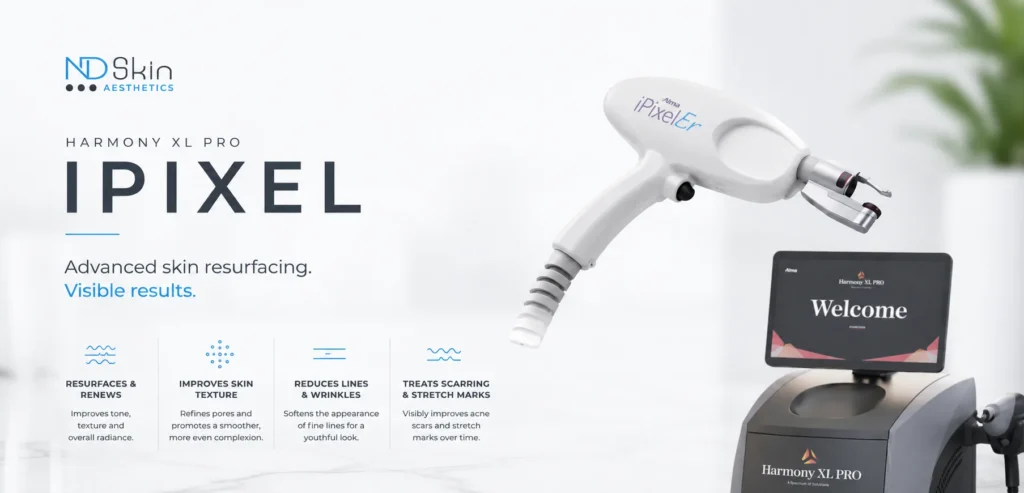
The iPixel at ND Skin is an Er:YAG laser at 2940nm, while CO2 lasers work at 10,600nm. Alma says the erbium wavelength speeds re-epithelialisation, which means the skin surface heals faster after treatment.
| Feature / Aspect | iPixel (Er:YAG) | CO2 (Pixel CO2) |
| Wavelength (per Alma) |
2940nm | 10.6 microns (10,600nm) |
| How it works | Fractional ablation: controlled wounding in tiny columns | Fractional ablation: controlled wounding in tiny columns |
| Healing | Alma says it speeds re-epithelialisation | Generally more aggressive, so recovery usually takes longer |
| At ND Skin | Harmony XL PRO iPixel erbium | Not offered |
Alma makes iPixel modules for both CO2 and erbium, so always ask which laser sits behind the name.
In plain English, the laser makes lots of tiny columns in the skin and leaves the skin between them alone. Your body repairs those columns by producing fresh collagen and elastin. CO2 resurfacing is generally more aggressive, which is why recovery usually takes longer.
Which Laser Gives Better Skin Results?
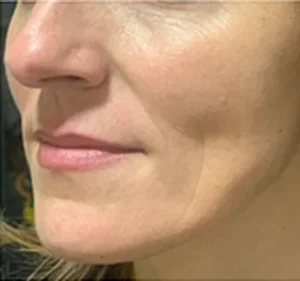
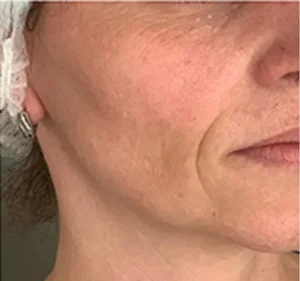
CO2 can lift deeper scars and wrinkles further, but many people want fresher texture and tone without heavy recovery. For that goal, iPixel is the better fit, giving visible improvement across a usual course of 3 sessions.
- A 2024 review of 418 patients found fractional CO2 worked significantly better than Er:YAG for atrophic acne scars. We’d rather you heard that from us first.
- A pilot study concluded that erbium suits superficial, mild concerns and people who want minimal downtime.
- Our iPixel treatment targets fine lines, acne scars, sun damage and uneven tone.
Think of it as picking the right tool for the job. If you have deep, boxcar-type scarring, CO2 may be the stronger route. If you have rough texture, early lines, sun damage or mild scarring, iPixel brings a gradual, natural improvement and lets you carry on with normal life. Plenty of clients notice fresher skin after the first session, with the full effect building over a usual course of 3, around 4 to 6 weeks apart.
How Much Downtime Should You Expect?
Expect roughly a week of recovery with erbium and one to three weeks with fractional CO2. CO2 also tends to cause longer redness and more discomfort, which matters if you have work, holidays or events coming up.
- A clinic review puts erbium downtime at about a week and fractional CO2 at one to three weeks, depending on settings.
- The 2024 review recorded longer redness and higher pain scores after CO2.
- A four-laser comparison for acne scars also found CO2 had the greater downtime.
- At ND Skin, each area takes only a few minutes. We apply numbing cream first, and mild redness, swelling or tenderness afterwards is normal and temporary.
To be fair, the evidence isn’t uniform. That same 2024 review recorded a shorter overall downtime for CO2 in the acne scar studies, so settings and the way recovery is measured both matter. At your consultation, we’ll talk through what recovery realistically looks like for your skin and your diary.
Is iPixel Safer for Pigmentation and Different Skin Tones?
Pigment change after laser is the main worry, and no ablative laser removes the risk. Studies generally rate erbium gentler, though the evidence is mixed. Assessment and a patch test still come first.
- Post-inflammatory hyperpigmentation is the most common complication after ablative laser.
- An older comparison recorded hyperpigmentation in 46% of single-pass CO2 patients and 42% of Er:YAG patients, so the risk is real with both.
- A later comparison found Er:YAG caused less redness and pigmentation than CO2.
- The 2024 review found no significant difference in pigmentation rates, though its authors suggested CO2 may carry more risk.
So the evidence is mixed, but it leans towards erbium for caution. What protects your skin most is the plan around the laser: daily sunscreen, no picking or rubbing, and sticking to your aftercare. Our Heliocare sun protection and ZO Skin Health ranges are a sensible place to start. If pigmentation is your main concern, read about our hyperpigmentation treatment before booking.
Who Is iPixel Best For?
iPixel suits people with early lines, rough texture, mild acne scarring, sun damage or uneven tone who want results with less time off. Deep scarring or heavy sagging may need a different plan, which we’ll tell you honestly.
- You want smoother, brighter skin and can’t take a week or more off.
- You prefer gradual, natural-looking improvement.
- You’re happy to follow aftercare, including sunscreen and no rubbing.
- You have acne marks you’d like softened. See our acne scar treatment.
- You need firmness more than resurfacing. Morpheus8 or 4D HIFU may suit you better.
If you have an active infection or a specific skin condition, we’ll check this at your consultation. That’s exactly why it comes before any laser touches your skin. Many clients also pair iPixel with microneedling or Dermalux LED therapy, and we’ll tell you if that makes sense for you.
Why Choose iPixel at ND Skin Aesthetics in Wigston?
ND Skin Aesthetics offers iPixel at 32 Bell Street, Wigston. Full face is £225 (£600 for 3), face and neck £250 (£700 for 3). Start with a £35 skin consultation, redeemable against treatment of £100 or more, patch test included.
- We’ve looked after clients from Wigston, Oadby, Blaby and Leicester since 2021, and are rated 5.0 on Google.
- Laser and skin treatments are carried out by our qualified therapists, and every journey starts with a £35 skin consultation, redeemable against treatment of £100 or more, patch test included.
- We’re open until 7pm on Thursdays and 5pm on Saturdays, a short drive from Leicester city centre.
- We don’t offer CO2, so this comparison rests on published evidence, not a sales pitch. We’d rather you had the right treatment than the one we happen to sell.
You’ll find everything on our iPixel laser treatment page, or you can book your £35 skin consultation online. It’s redeemable against treatment of £100 or more, patch test included.
What’s the Right Choice for You?
CO2 is the heavier hitter for deep scarring. For most people who want fresher, smoother skin and a normal working week, iPixel is the more practical choice. Call us on 0116 288 7267, message us on WhatsApp (07852 379067), or book your £35 skin consultation at 32 Bell Street, Wigston, LE18 1AD. It’s redeemable against treatment of £100 or more, patch test included. You can also read more about our clinic.
iPixel vs CO2 Laser: Quick Answers
Q: Is an iPixel laser better than a CO2 laser?
A: It depends on your goal. CO2 is stronger for deep scars, but iPixel gives smoother texture and tone with shorter recovery. We’d check suitability at your £35 skin consultation, redeemable against treatment of £100 or more, patch test included.
Q: How many iPixel sessions do I need?
A: Usually a course of 3, around 4 to 6 weeks apart. Many clients notice fresher skin after the first visit, while collagen keeps building between sessions. Your plan is set at consultation, as results vary.
Q: Does iPixel hurt?
A: Most clients find it comfortable. We apply numbing cream first, and you may feel warmth or a light prickling. Each area takes only a few minutes, and mild redness or tenderness afterwards is normal and temporary.
Q: When can I wear makeup after iPixel?
A: We usually advise waiting 24 hours. Avoid strenuous exercise and alcohol for a day, keep out of direct sun, don’t rub the area, and wear sunscreen. Our therapist will give you full aftercare instructions.
Sources
- Health & Aesthetics, iPixel Erbium or CO2 laser
- Alma Lasers, Harmony XL PRO brochure
- Alma Lasers, Pixel CO2 brochure
- Laser Focus World, Alma Lasers iPixel modules
- Sozo Aesthetic Clinic, Erbium laser versus fractional CO2 laser
- Journal of Cosmetic Dermatology, 2024 meta-analysis, PubMed 38733085
- Journal of Plastic, Reconstructive & Aesthetic Surgery, 2016, comparison of four lasers for acne scars
- Single-pass CO2 versus multiple-pass Er:YAG resurfacing: healing and side-effect rates
- Fractional CO2 versus Er:YAG pilot study
Results vary from person to person. This article is for general information and isn’t a substitute for a consultation.