Written by the ND Skin Aesthetics team, Wigston, Leicester · Last updated 23 November 2026
Quick answer
To know your skin type, wash your face with a gentle cleanser, pat dry, put nothing on and wait 30 minutes. If it feels tight, you probably have dry skin. If it looks shiny all over, it is likely oily. Shine only on the forehead, nose and chin points to combination skin. If it stings, itches or flushes easily, you may have sensitive skin. Comfortable and balanced usually means normal skin.
Most of us have bought a moisturiser because a friend swore by it, then ended up with a shiny forehead or tight, flaky cheeks. You are in good company: a Clinique survey of 303 UK women found around one in five were not sure which skin type they had. The good news is that you can work out your skin type at home in about half an hour, and it costs nothing.
What is a skin type, and why does it matter?
Your skin type describes how much oil your skin makes naturally. It is mostly down to your genes, so a new cleanser will not change it, though it can shift over the years. Knowing it stops you buying products that work against you.
- Type is not the same as concern. Acne, pigmentation and redness are concerns, and they can turn up on any skin type.
- Genetics set the baseline. The British Skin Foundation explains that skin types are mostly decided by sebum (oil) production, which is inherited.
- Life moves the goalposts. Skin often gets oilier in puberty and drier around the menopause, so it is worth checking in now and then.
- The wrong match shows. Breakouts, tightness and stinging are common signs your products do not suit you.
There is no single official skin type scale, so think of the types as useful descriptions, not labels for life.
The five skin types at a glance
The five common types are normal, oily, dry, combination and sensitive.
- Normal: balanced and rarely bothered by products. Very few people stay truly “normal” for life.
- Oily: shiny by the afternoon, with visible pores, blackheads and a tendency to break out.
- Dry: makes less oil, so it feels tight and can flake.
- Combination: oily across the forehead and nose, normal or dry on the cheeks.
- Sensitive: not about oil at all. Burning, itching and redness after products are the clues.
Sensitive skin is more common than people think. A UK study in the British Journal of Dermatology found 51.4% of women and 38.2% of men described their skin as sensitive. It is an older, self-reported study, but it shows you are far from alone.
How to check your skin type: 5 simple tests at home
Start with the bare-face test, then use the other four checks to confirm what you see.
- The bare-face test. Wash with a gentle cleanser, pat dry and wait 30 minutes with no products. The British Skin Foundation says dry skin feels tight straight away, oily skin turns shiny, and combination skin shines only in the T-zone.
- The blotting paper test. Press a sheet on your forehead, nose, cheeks and chin. Oil everywhere points to oily skin. Oil only from the centre suggests combination. Hardly any means dry or normal.
- The day test. Healthline suggests watching how your skin behaves from morning to evening. Note when the shine starts or the tightness creeps in.
- The pinch test. Gently pinch your cheek. Fine lines that linger can hint at low hydration.
- The patch test. Dab a new product on your forearm for a few days first. Burning, itching or a rash suggests sensitivity.
Do these on an ordinary day, not straight after a flight, a facial or a night out.
Skin type test: what skin type am I?
Use your results to tick the description that fits best:
- Tight after washing, little shine by evening, some flaking: dry skin.
- Shiny all over by midday, visible pores, prone to blackheads: oily skin.
- Shiny forehead, nose and chin, normal or dry cheeks: combination skin.
- Stings, itches or goes red with new products: sensitive skin (alongside any of the above).
- Comfortable all day with little shine or tightness: normal skin.
If two tests disagree, repeat them on another day. Mixed results are normal, and they usually mean combination or sensitive skin.
Reading your results: dry skin vs dehydrated skin
Dry skin lacks oil, while dehydrated skin lacks water, and any skin type can be dehydrated. If your face feels tight but also gets shiny, you may be oily and dehydrated rather than dry. Our guide to dry vs dehydrated skin explains how to tell the difference.
- Dry skin needs emollients and ceramides to replace what it does not make.
- Dehydrated skin needs humectants such as hyaluronic acid, even if it is oily.
- Common slip-ups: scrubbing oily skin harder, long hot showers, and swapping products every week. The British Skin Foundation advises adding one new active ingredient at a time, a few weeks apart.
What to do once you know your skin type
Keep it simple: cleanse, moisturise and wear SPF every morning. Then choose ingredients that suit your type.
- Oily: salicylic acid, retinoids and a light gel or lotion moisturiser labelled non-comedogenic.
- Dry: hyaluronic acid, urea, glycerine and ceramides, with a richer cream in winter.
- Combination: different products for different zones. Niacinamide and azelaic acid are usually fine all over.
- Sensitive: skip harsh acids and fragrance. If sunscreen stings, try a mineral formula with zinc oxide.
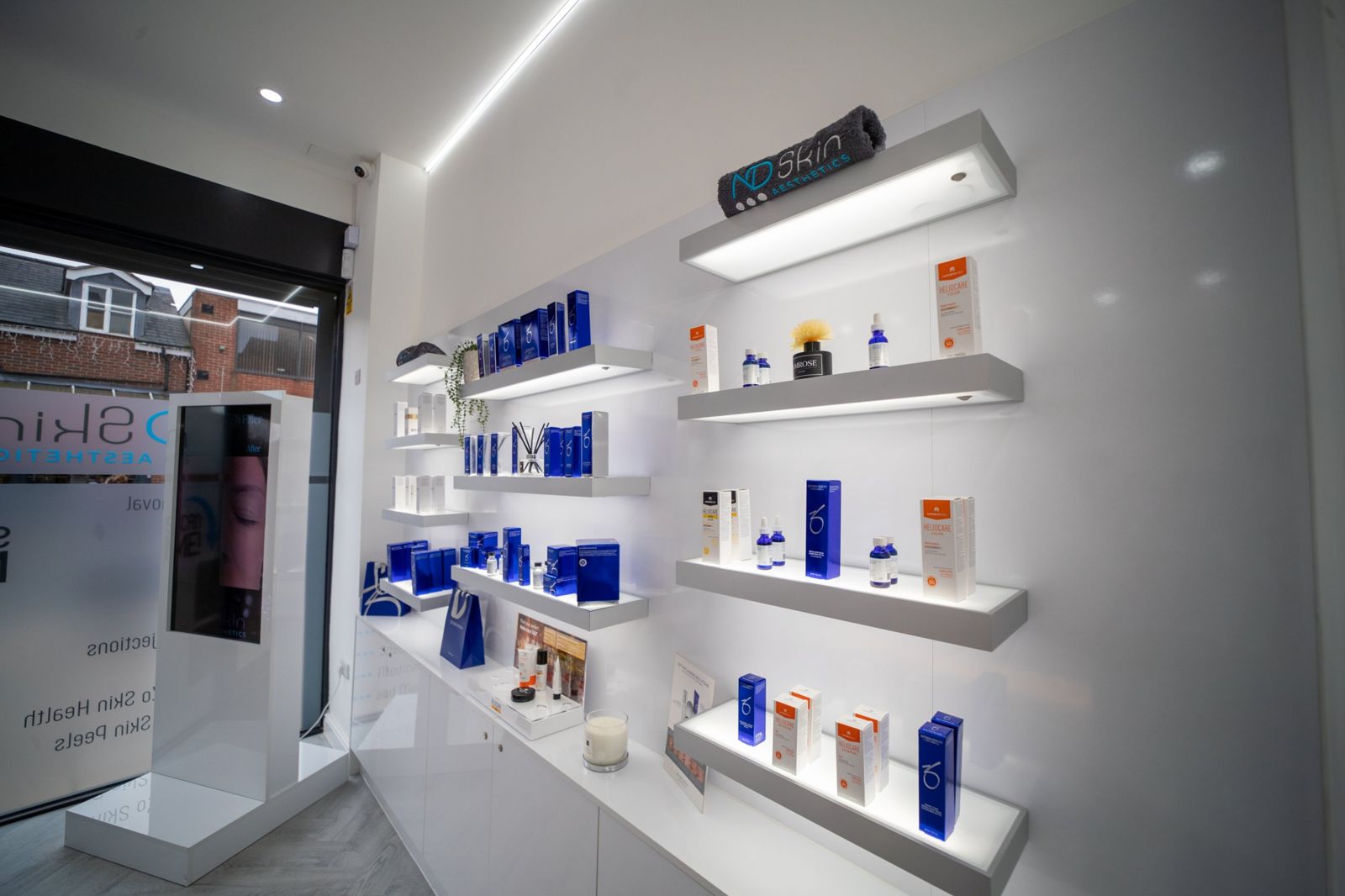
The British Skin Foundation says everyone should use daily sunscreen, whatever their type. At ND Skin Aesthetics we stock Heliocare, ZO Skin Health and Medik8, and we choose a routine around your skin rather than a trend.
Skin type in Leicester: hard water and central heating
Where you live shapes how your skin behaves. In Leicester, hard tap water and winter central heating can leave skin tighter and more irritated, so your results may look different in January than in July.
- Our water is hard. Local water data puts much of Wigston’s LE18 postcode at around 247 mg/l, in the “hard” band of 200 to 300 mg/l on the Drinking Water Inspectorate scale. It varies street to street.
- Research points to the skin barrier. Researchers at the University of Sheffield and King’s College London found that hard water can damage the skin barrier and make skin more sensitive to soaps. Severn Trent says hard water is not harmful to health but may aggravate existing conditions such as eczema.
- Small fixes help. Use lukewarm water, a gentle cleanser and a humidifier in dry rooms.
Re-test each season, especially when the heating goes on.
Still not sure? Get your skin type checked in Wigston
If home tests leave you unsure, a professional skin analysis settles it. At our clinic in Wigston, our OBSERV 520x scanner photographs your skin in several light modes, including polarised and UV light, to show oiliness, congestion, redness, pigmentation and sun damage that are hard to see in the mirror. Your therapist goes through the images with you and builds a skincare and treatment plan around what they find.

- Who we are: our Bell Street clinic has served Wigston, Oadby, Blaby and Leicester since 2021, rated 5.0 from more than 200 Google reviews and 940+ Fresha reviews. Skin treatments are carried out by our qualified therapists.
- What a scan adds: an OBSERV skin analysis is £35 (usually £70), redeemable against treatment of £100 or more.
- What your plan might include: a HydraFacial, Dermalux LED light therapy or acne treatment, plus the right home skincare.
Book an OBSERV skin analysis at 32 Bell Street, Wigston, a few minutes from Oadby and about 15 minutes from Leicester city centre, or call 0116 288 7267.
Frequently asked questions
How do I know my skin type?
Wash your face, pat dry, apply nothing and wait 30 minutes. Tight means dry, shiny all over means oily, shine only on the forehead, nose and chin means combination, and stinging or redness suggests sensitive skin.
Can my skin type change over time?
Yes. Genetics set your baseline, but puberty tends to make skin oilier and the menopause drier. Re-check each season, or whenever your usual routine stops working.
Can I have oily skin and still feel tight?
Yes. Oil and water are different things, so oily skin can still be dehydrated. Use a light moisturiser with hyaluronic acid instead of skipping moisturiser altogether.
Can a clinic test my skin type?
Yes. At ND Skin Aesthetics in Wigston, an OBSERV 520x skin analysis photographs your skin in several light modes to show oiliness, congestion, redness and pigmentation, and your therapist builds a plan around the results.
When should I see a professional?
If dryness, flaking or tightness continues despite moisturising, or acne will not settle, see your GP or a dermatologist. For an in-clinic scan, book an OBSERV skin analysis.
Sources
- British Skin Foundation: Identifying your skin type, Dr Jonathan Kentley
- Willis et al., Sensitive skin: an epidemiological study, British Journal of Dermatology (2001)
- Clinique UK skin type guide (survey of 303 UK women)
- Healthline: skin type test
- Drinking Water Inspectorate: water hardness
- Severn Trent: understanding water hardness
- Tap Water Data: LE18 water hardness
- Hard water and the skin barrier (University of Sheffield and King’s College London study)
This guide is general information, not medical advice. If you have a skin condition that is getting worse or worrying you, please see your GP.